
6 October 2026
Laser Cutting vs. Plasma vs. Waterjet: Which Is Right for Your Project?
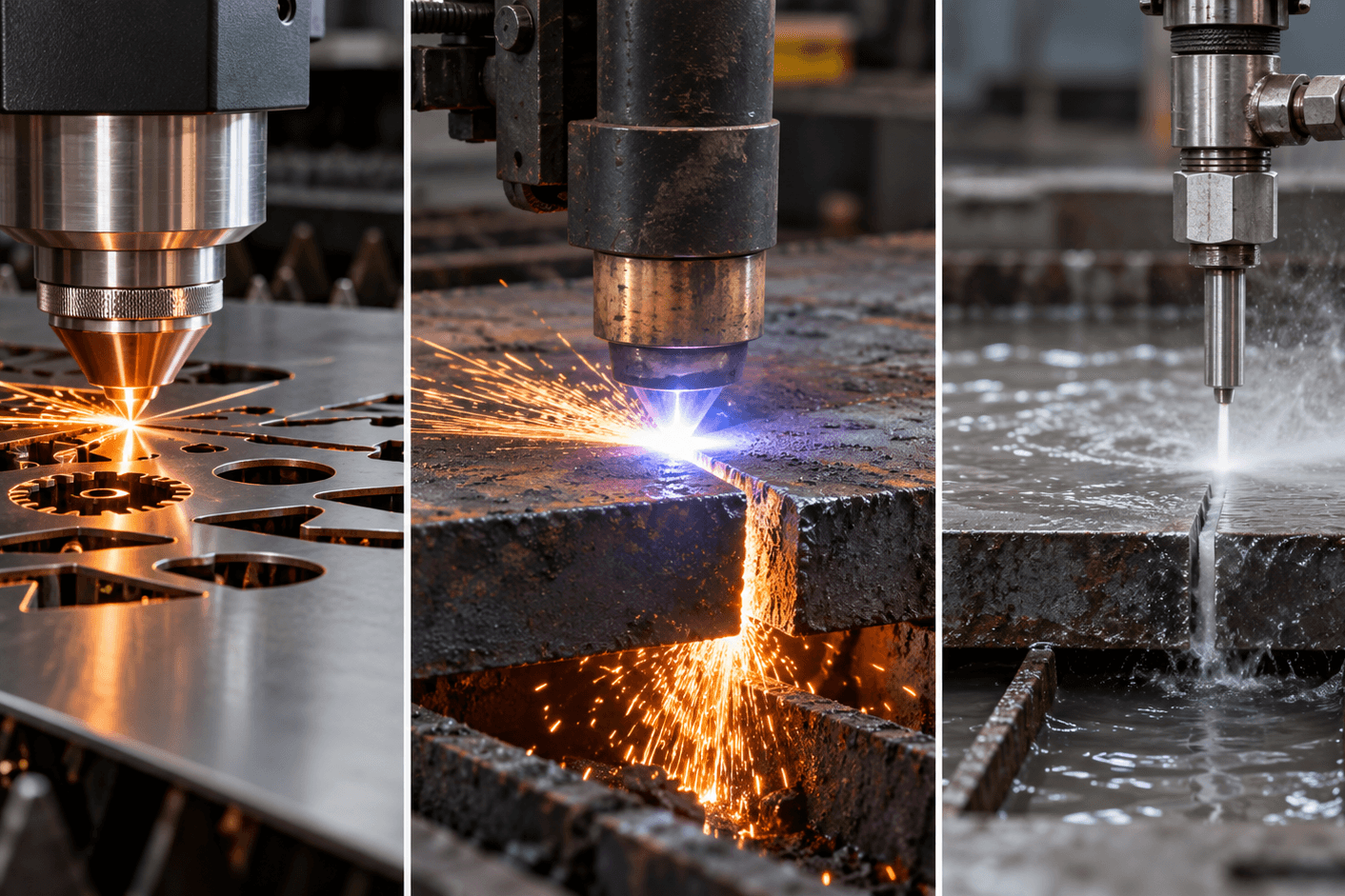
These three processes get grouped together because they all cut metal, but the underlying technology is completely different in each case — and that difference shows up directly in your cost, lead time and part quality. Picking the wrong one for a job isn't usually a disaster, but it's rarely the most economical choice either. Here's how each one actually works, and where it wins.
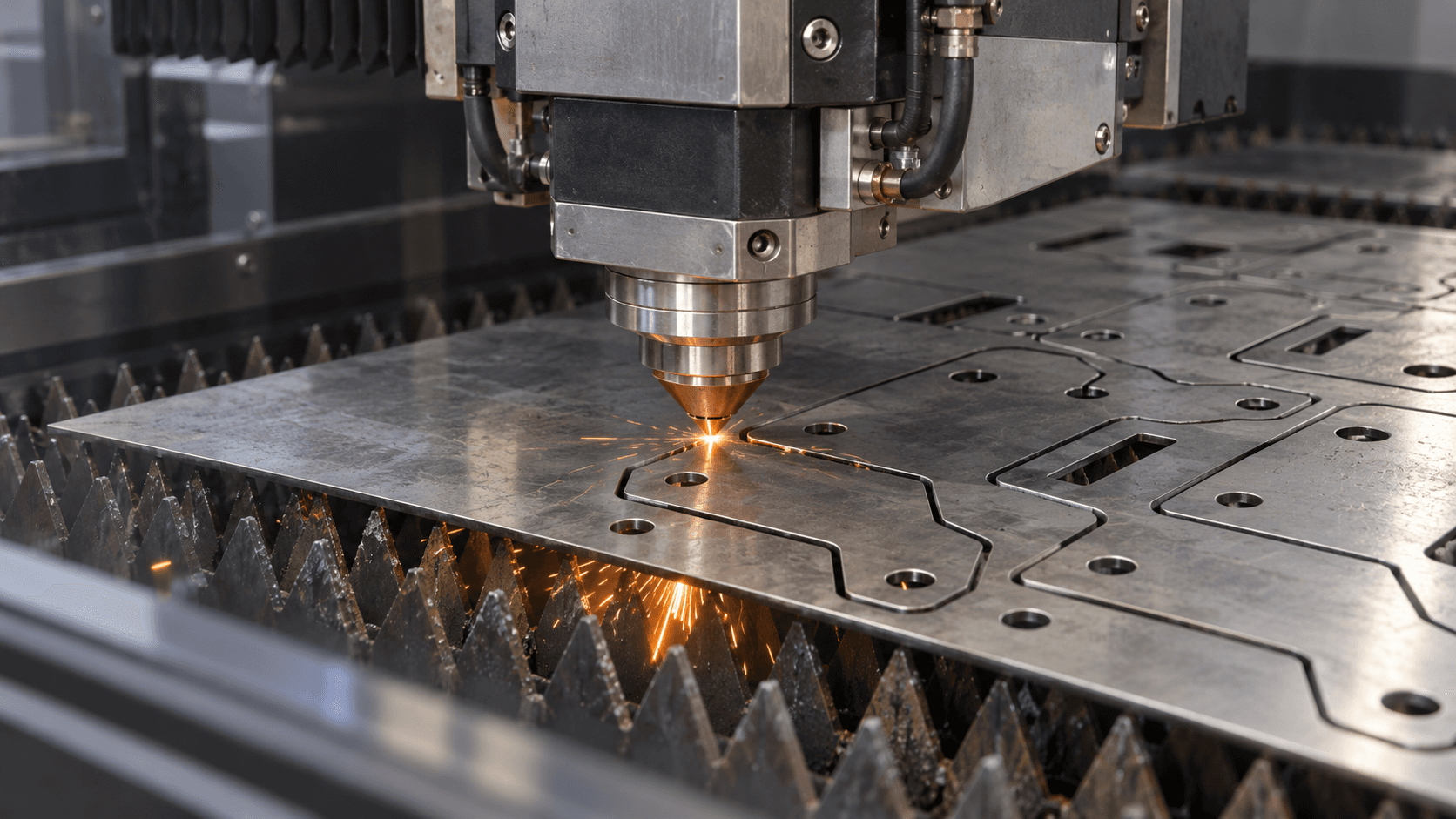
Laser cutting uses a focused beam of light to melt or vaporise material along a precise path. It's the tightest-tolerance option of the three, with a narrow kerf and clean edges that often need little or no secondary finishing. That makes it the natural choice for sheet metal — mild steel, stainless steel, aluminium — especially where a project needs fine detail, intricate patterns, or a large batch of identical parts cut quickly and consistently. Its main limit is thickness: laser cutting stays fast and economical on thin-to-medium gauge material, but the cost and cycle time both climb as plate gets thicker.
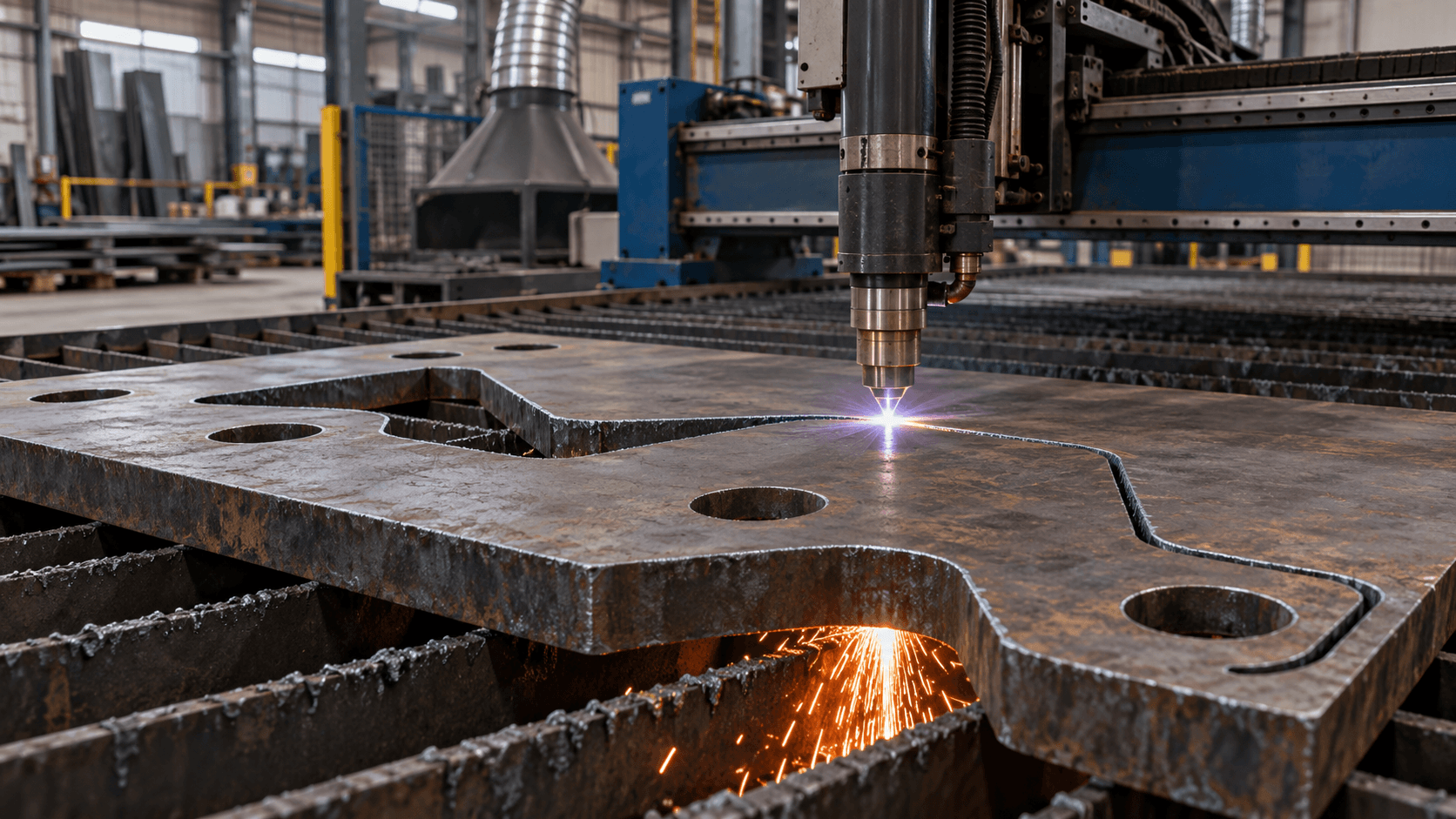
Plasma cutting uses a jet of ionised gas — an electrical arc passing through gas at high velocity — to melt through electrically conductive metal. It doesn't match laser cutting's precision or edge finish, and it leaves a larger heat-affected zone, but it's considerably faster and more cost-effective on thick plate. For structural steel work — frames, brackets, heavy fabrication where the part will be welded and finished afterwards anyway — that trade-off usually makes sense. Where a laser might struggle to stay economical, plasma is often the more sensible option.
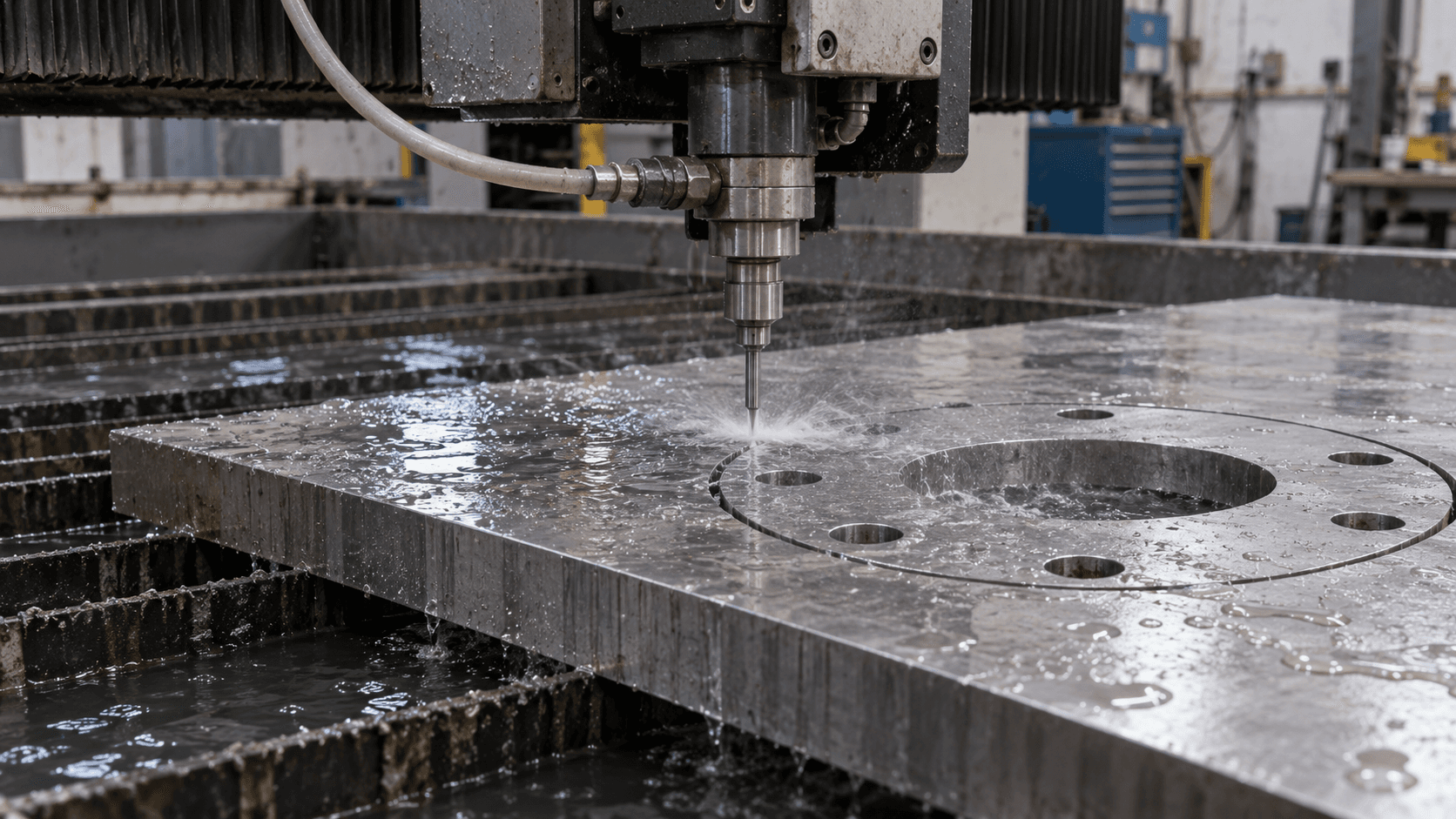
Waterjet cutting uses a high-pressure stream of water, usually mixed with an abrasive, to erode a path through the material rather than melting it. Because there's no heat involved, there's no heat-affected zone at all — no warping, no change to the material's hardness or grain structure at the cut edge. That makes it the right choice for heat-sensitive materials, pre-hardened metals, or projects where the metallurgical properties right at the edge genuinely matter. It's also the most versatile of the three: a waterjet doesn't care whether the next sheet in the queue is steel, composite, or something non-metallic entirely. The trade-off is speed — it's the slowest of the three processes, and typically the most expensive per part.
In practice, the decision usually comes down to a short list of questions: How thick is the material? Does the cut edge need to be weld- or finish-ready, or is some secondary work already planned? Does heat distortion matter for this particular part? And what's the batch size — is cycle time or edge quality the bigger cost driver? Answer those and the right process is usually obvious.
It's also worth knowing that plenty of real projects don't use just one. A single structure might have its main plate sections plasma cut for speed, while a smaller batch of precision brackets on the same job goes through laser cutting — matching each part to the process that actually suits it, rather than forcing an entire project through one method for the sake of simplicity.
If you're not sure which process your project needs, that's a normal starting point, not a problem — tell us your material, thickness and tolerance requirements, and we'll help you work out the right method and source it through the right partner in our network.